
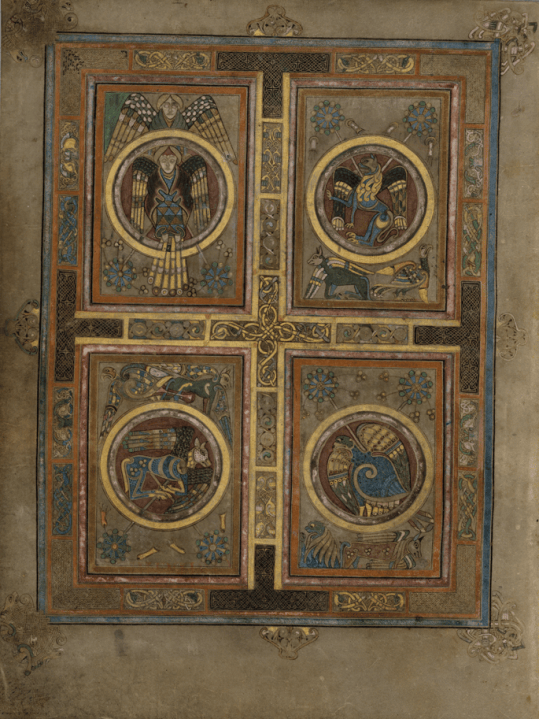
Folios 129v – 130r, Gospel of Mark
Caoimhe Ní Ghormáin
1 min read • 8 October 2026
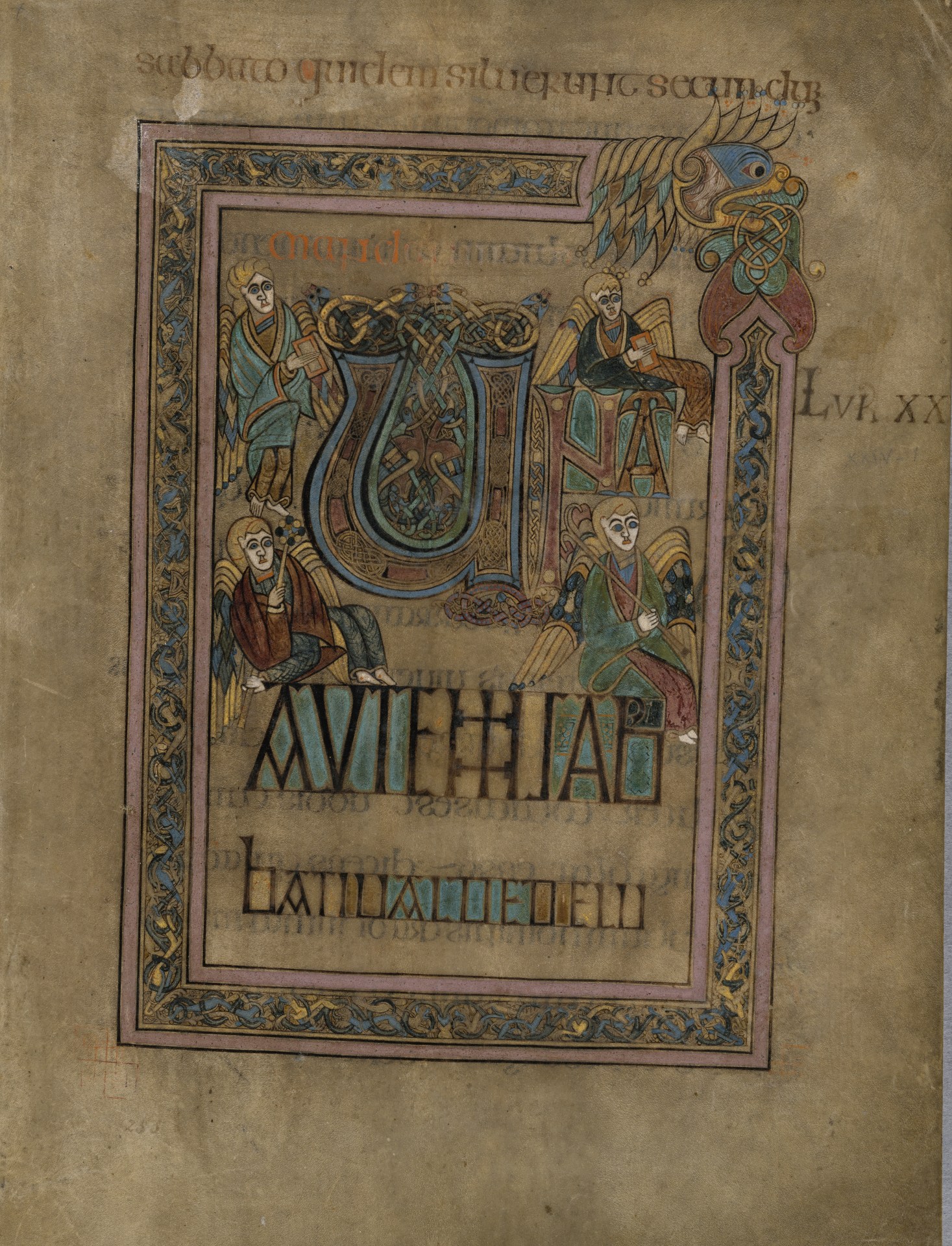
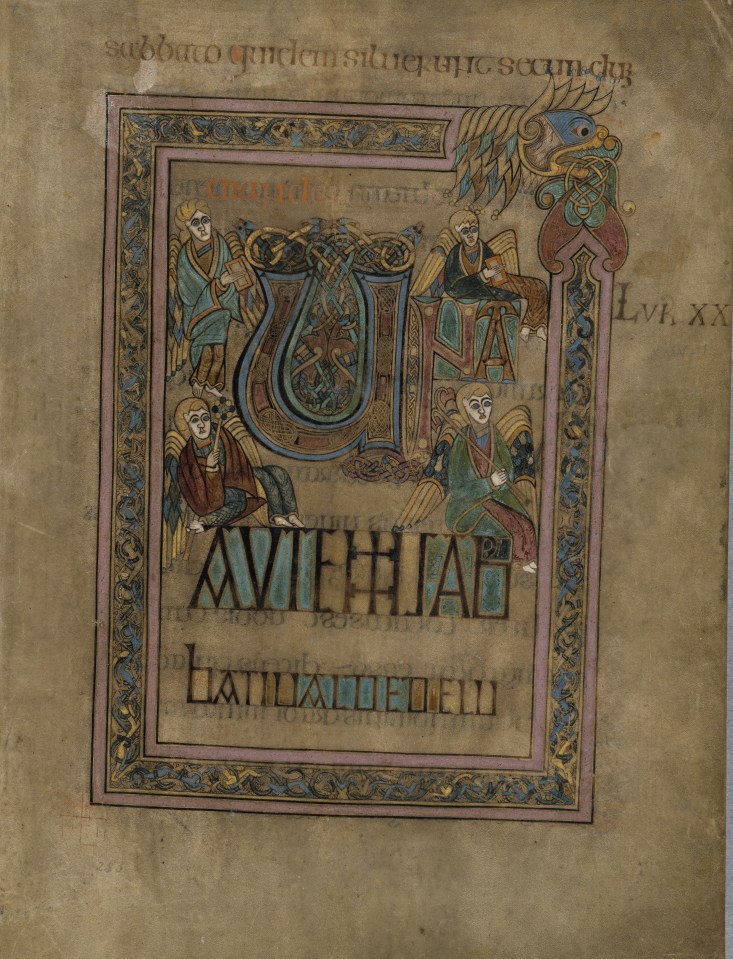
Book of Kells, folio 284v
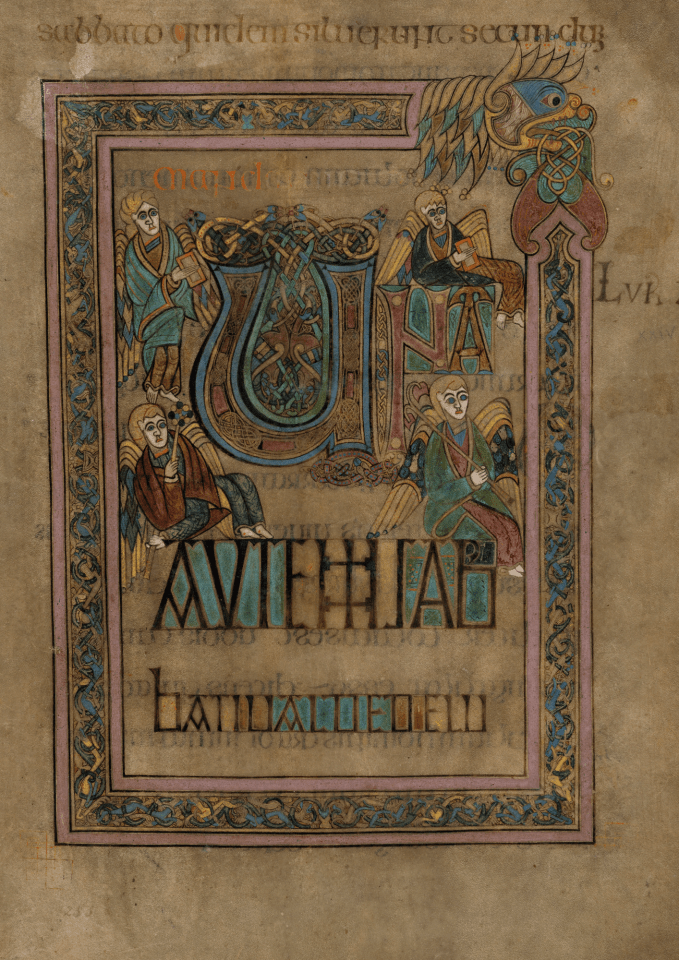
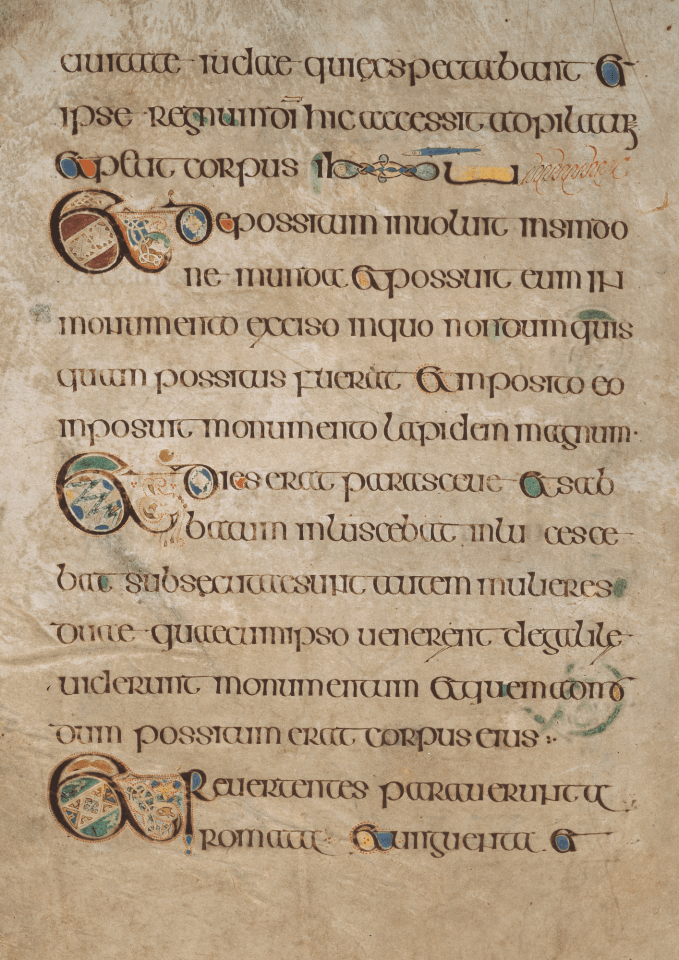
Book of Kells, folio 285r
The Una autem page, or una autem sabbati ualde delu [culo] (folio 285r), is a decorated page in the Book of Kells from the last chapter of Luke’s Gospel, beginning with the Latin words for ‘And on the first day of the week, very early in the morning’ (Luke 24.1). These words begin the account of three women going to Jesus’ tomb to anoint his body with spices, but they find it empty. The page is a fine example of the intricate artistry and symbolism found throughout the Book of Kells. Of particular note is the elaborate border featuring a lion, interlaced animals and four angels surrounding the word Una ‘first’.
Eucharistic imagery in the form of chalices (or urns), vines, grapes and communion hosts runs throughout the pages of the Book of Kells. A small blue chalice in the middle of the top border spills vines that multiply around the page, consumed by a parade of lions, two of them flanking the chalice and feeding on a trinity of grapes – demonstrating that the symbols are seldom isolated. The bowl of the letter U is filled with peacocks and snakes, symbols of resurrection. The letter N appears to be nailed to the page, evoking the crucifixion.
In the Book of Kells, angels are shown at critical moments in the life of Jesus: with his mother of folio 7v; at his temptation by the Devil on folio 202v and at the beginning of the resurrection narrative here on folio 285r. On these pages, angels are gathered in a group of four, to be identified as the principal archangels Michael, Gabriel, Raphael and Uriel. In their function as messengers, angels may be shown with flabella (liturgical fans), flowering rods, reeds or books. On folio 285r, the two angels in the top half of the image carry books, while those in the bottom half carry a flabella (bottom left) and a rod (bottom right).
On the top right of folio 285r, a lion with an interlace tongue is depicted as well as lion’s breath. In the Book of Kells, lions often appear exhaling a colorful, life-giving breath, symbolising the resurrection of Jesus Christ. This imagery stems from the medieval belief that lion cubs are born dead and brought to life after three days when the male lion breathes on them. It highlights Christ’s resurrection three days after his death. Bunches of grapes also dangle from the lion’s mane – a reference to the holy Eucharist (a Christian sacrament in which bread and wine are consecrated in remembrance of Jesus’s death).
1 min read • 8 October 2026

1 min read • 26 August 2026
1 min read • 7 July 2026